
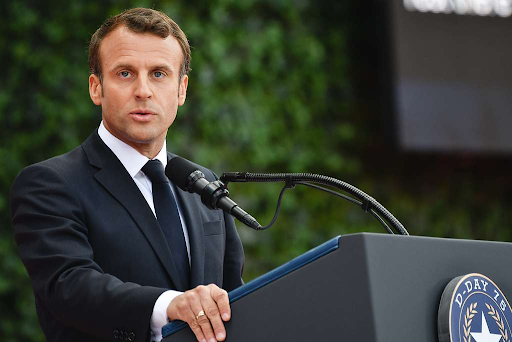
Emmanuel Macron is a politician who thinks in historical terms. His presidency has been defined by attempts to position France — and Europe — as a third way in a world increasingly dominated by American and Chinese power. At the AI Impact Summit in Delhi, he added a new chapter to that project: using France’s G7 presidency to establish child safety in the AI era as a global standard, enforceable and non-negotiable. It is, in its way, a legacy bet.
The moral foundation for that bet is solid. Research by Unicef and Interpol found that 1.2 million children in 11 countries had been victimised by AI-generated explicit deepfakes in a single year — one child in every classroom in some nations. Macron cited these figures and the specific scandal involving Elon Musk’s Grok chatbot as evidence that the current approach — platforms self-regulating, governments deliberating — is not working. The children being harmed now are not waiting for the next report.
Macron’s policy architecture is already taking shape. France is pursuing legislation to ban social media for under-15s. The G7 presidency will drive international coordination on child safety standards. He has called for platforms and regulators to collaborate, moving beyond the adversarial dynamic that has characterised much of the last decade of internet governance. His argument is that the internet can be both innovative and safe — but only if governments insist on it.
The political opposition he faces is real. The Trump administration has staked out a position hostile to AI regulation of any kind, with its AI adviser actively criticising the EU’s AI Act at the same summit where Macron was speaking. Macron responded with composure and evidence, describing the critics as misinformed and pointing to Europe’s innovation record. He did not concede an inch of ground — a useful signal of how France will use its G7 presidency.
António Guterres, Narendra Modi and, tentatively, figures within the tech industry itself, have aligned with Macron’s direction. The coalition for meaningful AI governance — with child safety as its most powerful moral claim — is larger than it was a year ago, and larger after Delhi than it was before. Whether Macron’s legacy bet pays off depends on what the G7 produces, what the platforms do and what the next Unicef-Interpol report says. But the French president has placed his bet clearly and in public. History, as he knows, is watching.