
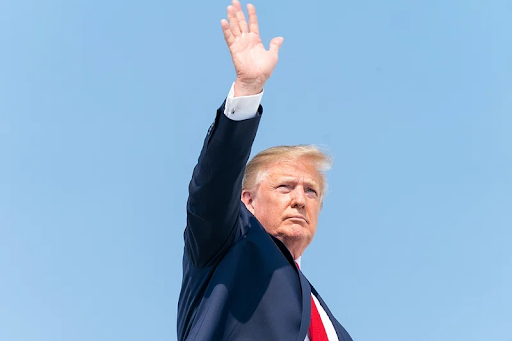
Donald Trump has not been subtle about his ambitions for the Board of Peace. He wants it to challenge the United Nations Security Council’s role in resolving international conflicts — essentially positioning his new institution as a superior alternative to the body that has managed international peace and security since 1945. The UN, needless to say, has a different view.
The tension between Trump’s board and the UN system is structural. The Security Council derives its authority from the UN Charter, an internationally ratified treaty that gives it primary responsibility for international peace and security. The Board of Peace has no equivalent legal foundation — it is an initiative assembled by invitation, with membership determined largely by political affiliation with or deference to the United States.
The UN’s technical agencies have been doing significant work on Gaza that predates the board and will continue regardless of its decisions. The joint estimate of $70 billion for reconstruction, produced by the UN, European Union, and World Bank, is the most authoritative assessment of what rebuilding will cost. The IAEA and other UN bodies are involved in the humanitarian response. UNRWA, despite US pressure, remains one of the primary service providers for Palestinians.
Excluding the UN from a central role in Gaza’s recovery would not eliminate its presence — it would create a parallel governance structure with unclear lines of authority and potential for contradiction. The countries that have declined to join the board — including France, Norway, and Sweden — are likely influenced in part by their commitment to the multilateral system the UN represents.
Trump’s board may ultimately push the UN toward greater effectiveness through competitive pressure. Or it may create institutional confusion that complicates rather than accelerates progress. Thursday’s first meeting will begin to reveal which direction the initiative is headed.