
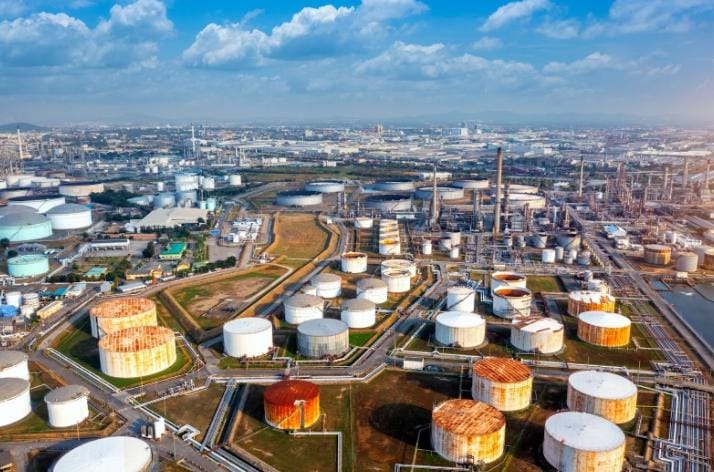
The Iran conflict has triggered a global energy security emergency that is exposing the dangerous degree to which the world economy remains dependent on oil and gas produced in one of its most politically unstable regions. With Brent crude surging past $91 a barrel — more than 25% in a single week — and European gas prices hitting three-year highs, the question of energy security has returned to the top of the global policy agenda with a force not felt since the post-Covid energy crisis.
The vulnerability is structural and well-known, but the Iran conflict has made it viscerally immediate. The Strait of Hormuz, through which a fifth of the world’s oil and gas flows, has been effectively closed to normal commercial traffic. Gulf storage facilities are filling rapidly, with Kuwait already cutting production and Saudi Arabia and UAE expected to follow within 20 days. Qatar’s LNG export infrastructure has been damaged, cutting roughly 20% of global LNG supply.
None of these vulnerabilities are new — the chokepoint problem of the Strait of Hormuz has been identified as a strategic risk for decades. What the current crisis has demonstrated is that the global economy has failed to build adequate resilience against the risks it has long known about. The world still depends overwhelmingly on Gulf energy, still routes that energy through the Strait of Hormuz, and still has no adequate backup when that route is disrupted.
Qatar’s energy minister has provided the starkest illustration of this dependence, warning that continued conflict could force all Gulf exporters to halt production and push oil to $150 a barrel. At that price, the economic consequences for oil-importing nations — particularly in Asia, Europe, and the developing world — would be severe. The warning is not just about the immediate crisis but about the systemic fragility of a global energy system built around a single region.
Financial markets have registered the emergency with widespread alarm. Stocks have fallen sharply globally, bond yields have surged, rate cut expectations have been abandoned, and airlines have warned of massive losses. The immediate question is how the conflict will be resolved. The longer-term question — how to build an energy system that does not make the entire global economy hostage to events in a single region — will be with us long after this crisis has passed.