
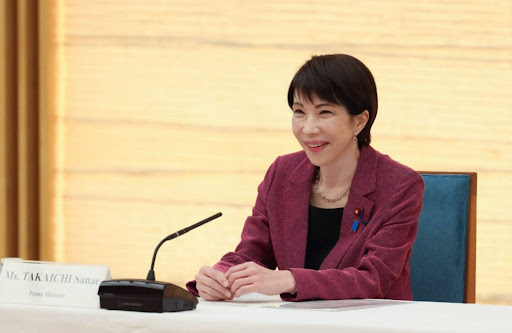
Constitutional pacifism is shaping Japan’s response to the Middle East energy crisis as decisively as its strategic oil reserves, with Prime Minister Sanae Takaichi announcing the biggest-ever drawdown from national petroleum stocks — approximately 80 million barrels to refiners from Thursday — while simultaneously declining Donald Trump’s request for Japanese naval involvement in the Strait of Hormuz. The twin commitments to energy security and constitutional principle define a distinctively Japanese approach to a global crisis. Takaichi explained Japan’s naval constraint directly to Trump at their Washington summit, describing it as a constitutional absolute rather than a political preference.
Japan’s postwar constitution effectively prohibits the deployment of the country’s military forces for overseas combat operations. This constraint, which has shaped Japanese foreign policy for over seven decades, has been consistently maintained by successive governments including Takaichi’s. The prime minister’s refusal to accede to Washington’s request represents a continuation of this principle under extraordinary pressure.
The economic dimension of Japan’s response is equally resolute. The 80 million barrel release — covering 45 days of national consumption, 1.8 times the previous Fukushima-era record — draws on Japan’s total reserves of approximately 470 million barrels. Japan sources over 90% of its crude from the Middle East, making the current Hormuz disruption a direct and immediate economic threat. The reserve deployment is the primary tool for maintaining supply continuity.
Government subsidies are holding gasoline at approximately ¥170 per litre, following a surge to record levels of ¥190.8. Weekly reviews ensure the subsidy remains appropriately calibrated. Consumer anxiety about household goods shortages has been addressed through active communications from industry bodies and government officials, drawing on Japan’s experience with previous crisis communications.
Takaichi has committed Japan to intensive multilateral diplomacy as the primary international contribution to stabilizing the Middle East situation. She has described peace in the region as vital for Japan and the international community, pledging coordination with relevant partner nations. Japan’s response — historic reserve deployment, principled constitutional restraint, and active diplomacy — reflects a consistent and values-driven approach to a complex global challenge.