
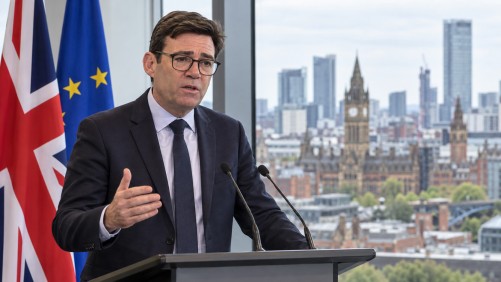
As the United Kingdom gears up for a pivotal summit in Brussels on November 20, Prime Minister Andy Burnham is urging a reevaluation of the nation’s long-term relationship with the European Union. In a recent address to Parliament, Burnham emphasized the need for a pragmatic approach to future UK-EU ties, highlighting that the current arrangement falls short in supporting economic growth, managing immigration, and enhancing security cooperation.
The upcoming summit is set to address several key areas, including food and drink trade, youth mobility, and emissions trading. The UK government anticipates that successful agreements in these sectors could potentially boost the economy by approximately £10 billion annually. Burnham stressed the importance of not missing opportunities to strengthen relations with Europe, while also making it clear that the immediate focus should be on securing practical agreements at the summit.
Burnham clarified that the government’s intentions do not include reversing the Brexit referendum outcome, nor are they considering the reintroduction of free movement in current negotiations. Instead, he underscored the necessity for improved cooperation on migration and border security—a sentiment that could potentially pave the way for more robust bilateral relations.
Negotiations, however, are not without challenges. The proposed youth mobility scheme, which would allow young British and EU citizens to live, work, or study in each other’s countries temporarily, remains a contentious issue. Discussions are ongoing concerning eligibility, participation limits, and university tuition fees. Additionally, the EU’s “Made in Europe” initiative, aimed at bolstering European manufacturing in strategic sectors, raises concerns among British manufacturers about potential exclusion from European supply chains.
Addressing these complexities, Burnham acknowledged the risks but advocated for a mutually beneficial arrangement, particularly in light of competition from Chinese exports. Furthermore, the UK government continues to face scrutiny over allegations of Russian interference in the 2016 Brexit referendum, though Burnham noted that while Russian actors attempted interference, there is no evidence suggesting it altered the referendum’s outcome.
The November summit will serve as a critical test for rebuilding trust and establishing agreements on shared economic and political priorities between Britain and the EU. While immediate progress is possible, significant disagreements could impede efforts to forge a closer long-term partnership. The outcome of these discussions will be crucial in determining the future trajectory of UK-EU relations.