
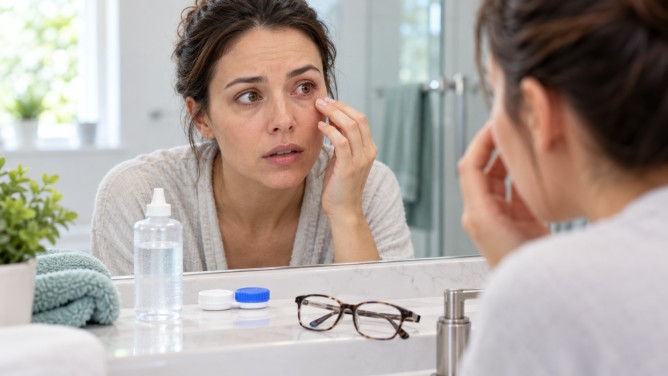
Contact lenses provide a convenient alternative to glasses for those seeking improved vision or a new eye color. However, improper use or poor hygiene can lead to significant eye issues. Recognizing early warning signs and adhering to safe lens-care practices are crucial for maintaining eye health.
There are several symptoms that contact lens wearers should be vigilant about. Persistent redness may signal irritation, inflammation, or infection, requiring medical attention if it continues after removing lenses. Eye pain is another concern, as it might indicate corneal damage or infection, necessitating prompt assessment. A burning or stinging sensation could result from dryness, an ill-fitting lens, or a reaction to lens-care products, and it should not be ignored. Sensitivity to light might indicate corneal inflammation or other problems, warranting further investigation.
Blurred or reduced vision is not just a minor inconvenience but could indicate a serious issue needing immediate attention. Excessive watering of the eyes, especially when coupled with pain or redness, suggests the need for an eye examination. Unusual discharge might be a sign of infection or inflammation, and wearing lenses should be avoided until cleared by an eye-care professional. Lastly, a gritty or foreign-body sensation could point to dryness, irritation, or a corneal scratch.
In the event of these symptoms, it is essential to remove contact lenses immediately and refrain from using them until symptoms disappear and an eye examination is conducted. Do not use leftover antibiotic or steroid eye drops without medical advice, and seek emergency care if vision rapidly declines or pain is severe.
To mitigate the risk of complications, proper hygiene and handling are paramount. Always wash and dry hands before touching lenses, use the recommended disinfecting solution, and avoid sleeping in lenses unless prescribed for overnight use. Contact lenses should not be exposed to water, including during showers or swimming, unless advised by a professional. Follow replacement schedules diligently and never share lenses to prevent infections.
While children and teenagers can use contact lenses with appropriate prescriptions and hygiene practices, those with active eye infections, dry eyes, or certain allergies should be cautious. Protective eyewear is advised for individuals in environments with dust, smoke, or chemicals.
Ultimately, contact lenses can be a safe and effective vision solution when maintained correctly. If they consistently cause discomfort, consult with an eye-care professional to assess their fit or explore alternative options such as glasses. Prioritizing eye health over convenience is essential for long-term vision preservation.