
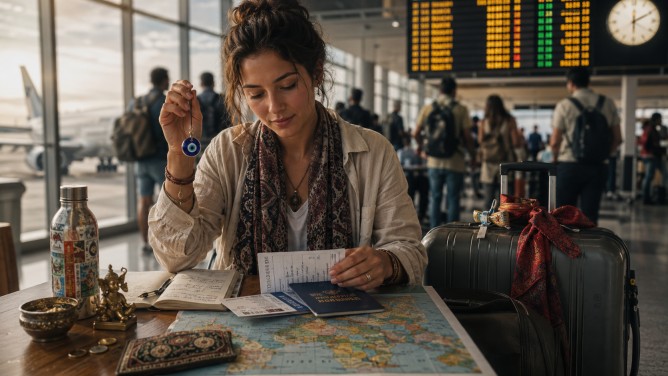
The thrill of travel often comes with its own set of traditions and rituals, steeped in cultural beliefs that aim to bring good fortune and protection throughout the journey. Across the globe, these travel superstitions add a layer of intrigue and comfort, becoming an integral part of the travel experience for many. From carrying garlic to tapping a plane’s exterior, these practices are passed down through generations, each with its own unique story and purpose.
In the Balkans, for instance, a clove of garlic is more than just an ingredient in the kitchen; it is a talisman against misfortune. Travelers from this region often tuck a clove into their luggage, convinced that it wards off negative energy and the evil eye, ensuring a safe and lucky trip. Similarly, a ritual common among many flyers is touching or tapping the outside of an aircraft before stepping on board. This simple gesture, believed to bring good luck, also provides a moment of reassurance for those who may feel apprehensive about flying.
Starting a journey “on the right foot” is not just a metaphor in some cultures. Literally stepping onto an aircraft with the right foot first is seen as a way to invite positive energy and good fortune for the trip ahead. Meanwhile, in parts of the Middle East and the Balkans, families send off travelers by sprinkling or pouring water behind them. This act is symbolic of a smooth journey, with the flowing water representing the hope of a safe return.
Numbers, too, play a critical role in travel superstitions. While the number 13 is widely regarded as unlucky in many Western societies, in China, it is the number 4 that is often shunned due to its phonetic similarity to the word for death. Italians, on the other hand, traditionally view the number 17 as inauspicious. These beliefs can affect everything from hotel room assignments to the floors of buildings, subtly influencing travel experiences.
In Slavic cultures, a moment of reflection before embarking on a journey comes in the form of sitting on one’s luggage. This brief pause allows travelers to collect their thoughts and mentally prepare for their trip. Additionally, sweeping the floor immediately after someone departs is discouraged in several cultures, as it is thought to sweep away the person’s good luck or hinder their safe return. Although these customs lack scientific backing, they continue to thrive as a cherished aspect of travel. For many, indulging in these superstitions is less about validation and more about celebrating cultural heritage, family traditions, and the excitement that accompanies setting out on a new adventure.