
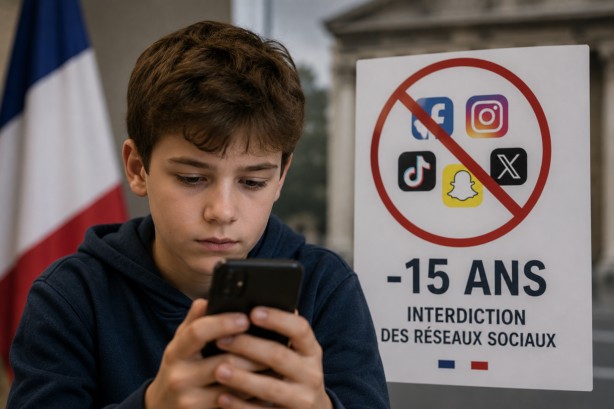
In a landmark move, France has become the first nation within the European Union to implement a comprehensive ban on social media access for children under 15. This decision follows the French parliament’s recent passage of new legislation focused on heightening online safety standards. President Emmanuel Macron has been a vocal advocate of this initiative, which mandates social media platforms to block the creation of new accounts by users under 15 starting from September 1. Additionally, existing accounts for children in this age group must be terminated by January 2027, with age verification becoming compulsory.
The onus of enforcing this new regulation falls upon the social media companies themselves. They are tasked with establishing age-verification systems that must also safeguard users’ personal information. The legislation extends beyond social media, introducing a ban on mobile phone use in high schools at the start of the upcoming academic year. Notably, educational resources like online encyclopedias and educational websites are not subject to this ban.
Proponents of the law argue that it is a vital step in shielding children from the detrimental impacts of excessive social media use on mental well-being. Meanwhile, dissenters express concerns regarding privacy issues, potential hurdles in enforcement, and the likelihood of children finding ways to circumvent the age-verification mechanisms.
While France leads this initiative, the European Commission is concurrently exploring the possibility of broader EU-wide regulations concerning children’s online safety. As part of this effort, the Commission has commenced trials of a digital age-verification application in several member countries.
France’s decisive action reflects a growing global trend toward more stringent control over children’s access to social media platforms. As nations worldwide grapple with the complexities of digital safety for younger users, France’s legislative approach may serve as a model for future regulatory frameworks.