
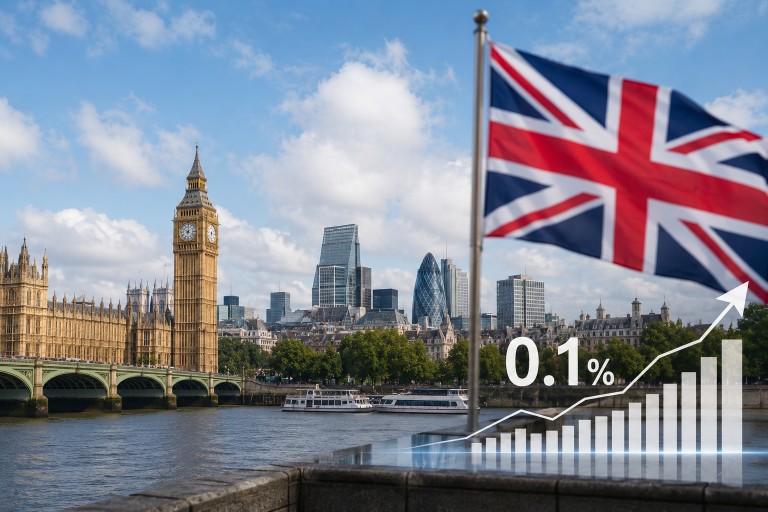
The UK economy experienced a slight rebound in May, recording a 0.1% growth following a similar contraction in April. This modest expansion was attributed primarily to a 0.3% rise in the services sector. However, gains in services were somewhat counterbalanced by a 0.5% decline in production and a notable 0.8% drop in construction activities. Notably, the scientific research and development sector emerged as a standout performer, achieving a significant 5.1% increase over the month.
Examining the broader picture, the UK economy grew by 0.7% over the three months leading up to May. This marks a slight deceleration from the previous three-month period, which saw a growth rate of 0.8%. Despite the challenges, economists have pointed out that the economy has shown a degree of resilience, managing to navigate higher energy prices and the uncertainties stemming from conflicts in the Middle East.
That said, experts continue to express caution, emphasizing that rising energy costs and ongoing disruptions in supply chains remain significant threats to sustained economic growth. These factors are crucial points of concern as they could potentially undermine the gains achieved thus far.
In light of these developments, the International Monetary Fund has revised its forecast, projecting a 1% growth for the UK economy over the year. Although the forecast has been upgraded, analysts maintain that the outlook is still clouded by ongoing geopolitical tensions, which could influence economic performance unpredictably in the near future.