
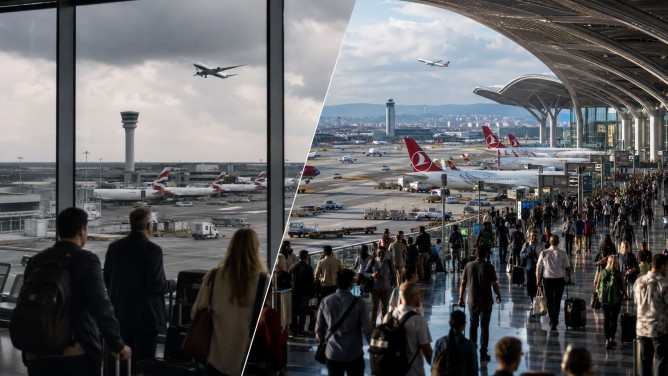
In a shift among Europe’s major airports, Istanbul Airport has overtaken Heathrow as the continent’s busiest hub, with July passenger numbers reaching 8.15 million compared to Heathrow’s 7.86 million. This change marks a significant moment in the ongoing competition for air traffic dominance in Europe.
Heathrow Airport experienced a 1.5% decrease in passenger traffic compared to July of the previous year, whereas Istanbul Airport saw an increase of 2.3%. The decline at Heathrow has been partly linked to disruptions related to the conflict in the Middle East. As a result, the UK government faces renewed calls to greenlight Heathrow’s proposed third runway, a £33 billion project that aims to boost the airport’s annual capacity to around 150 million passengers, addressing its current near-full capacity operation with just two runways.
Heathrow officials have emphasized the necessity of expanding capacity to enhance the UK’s global connectivity, trade, and tourism. As the debate continues, the comparative advantages of Istanbul Airport come into focus. Opened in 2018, the Turkish airport operates continuously and boasts a larger site with three operational runways. A fourth runway is expected to be completed by the end of 2026, further increasing its capacity.
While Heathrow grapples with its capacity challenges, other UK airports have reported growth. Both London Stansted and Manchester airports have achieved record passenger numbers for July, handling 3.1 million and 3.4 million travelers, respectively. These figures highlight the ongoing demand for air travel within and from the UK, despite the competitive pressures faced by Heathrow.